
Introduction
Senior dogs often become less comfortable with movements they once handled easily. Jumping onto a bed or climbing into an SUV can become particularly difficult. Joint stiffness, reduced muscle strength, and mobility changes can make these movements stressful.
The Best Orthopedic Dog Ramps for Beds and SUVs: Preventing Joint Strain in Senior Dogs can provide a safer alternative to jumping. A properly designed ramp reduces the height and impact associated with getting into elevated spaces. It can also help dogs maintain greater independence at home and during travel.
However, choosing the right ramp requires more than finding one with a suitable weight rating. Its length, incline, surface, stability, width, and portability all matter. The right design should match your dog’s size, mobility, confidence, and daily routine.
Why Senior Dogs May Struggle With Jumping
Aging naturally affects a dog’s movement. Senior dogs may develop stiffness after resting or show less flexibility in their hips and knees. Some dogs also become hesitant when facing stairs, furniture, or vehicle entrances.
Jumping creates a sudden landing force. That impact can be uncomfortable for dogs with sensitive joints. Repeated jumping may also make daily activities more challenging.
A ramp changes the movement from a jump into a controlled walk. Therefore, your dog can reach a bed or vehicle without making a sudden leap.

This is especially useful for dogs that already show difficulty standing, climbing, or turning. A ramp does not treat an underlying medical condition. However, it can make everyday movement more manageable.
How Orthopedic Dog Ramps Help Prevent Joint Strain
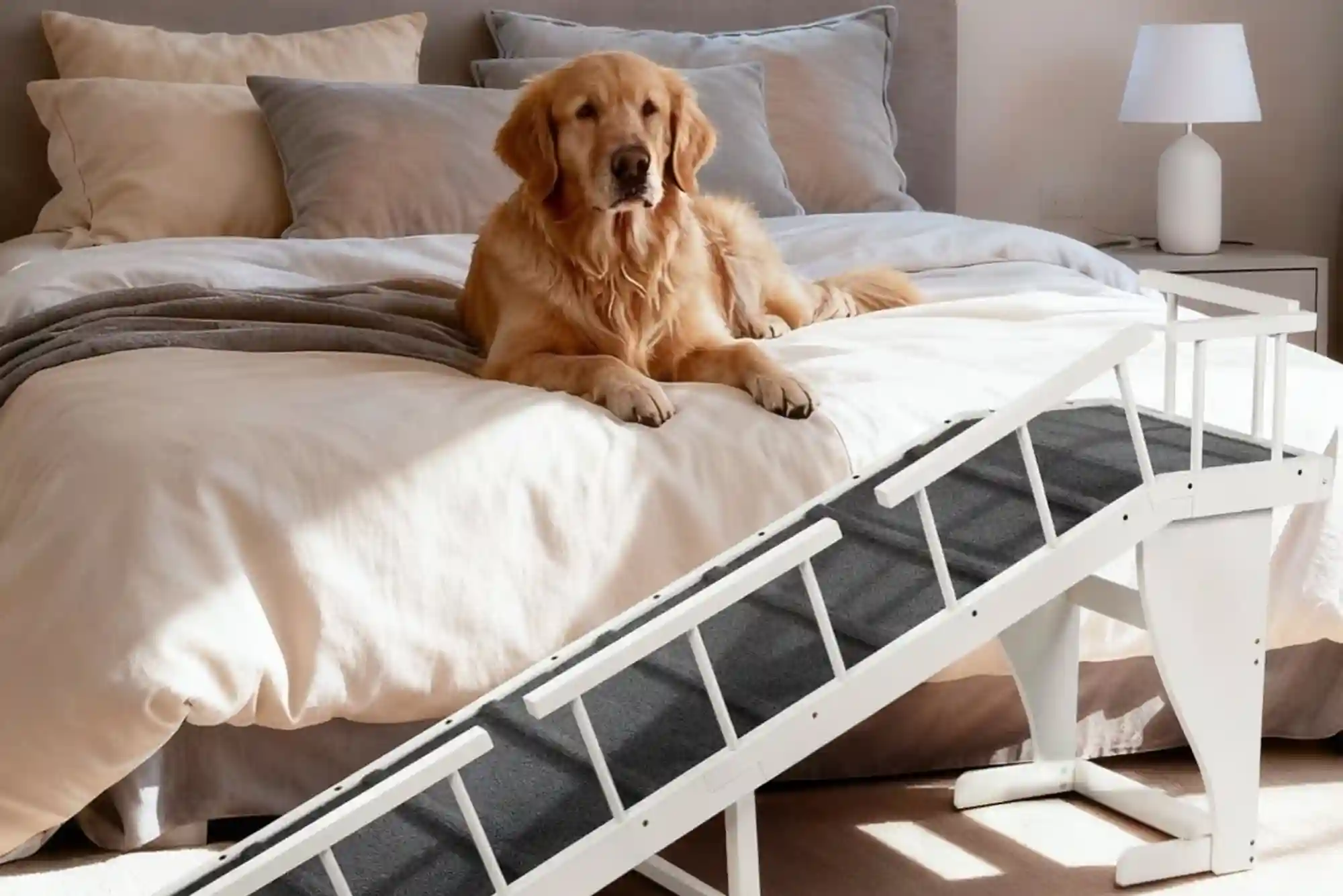
The Best Orthopedic Dog Ramps for Beds and SUVs: Preventing Joint Strain in Senior Dogs should provide a gradual incline and secure footing. These features allow a dog to move upward without repeatedly jumping.
A gentle slope is particularly important for older dogs. A very steep ramp can place additional demand on the shoulders and rear legs. In contrast, a longer ramp generally allows a more gradual climb.
The walking surface also matters. Senior dogs may feel uncertain on smooth materials. A textured or carpeted surface can provide better traction and confidence.
Stability is equally important. A ramp that shifts while a dog walks can create fear. It may also increase the risk of slipping or falling.
For these reasons, orthopedic design should focus on comfort, traction, stability, and appropriate incline rather than appearance alone.
Choosing the Right Ramp for a Bed
A bed ramp needs to work within your bedroom while providing enough length for a comfortable incline. Before purchasing one, measure the height from the floor to the top of the mattress.
A short ramp may fit conveniently beside the bed. However, it can create a steeper incline. A longer ramp generally provides a gentler approach.
Width should also match your dog’s body size. A narrow surface may make some dogs uncomfortable, particularly if they have reduced balance.
The ramp should remain firmly positioned during use. Some models include rubber feet, grippy bases, or attachment systems. These features can help reduce movement on smooth floors.
You should also consider nighttime use. A senior dog may need access to the bed when the room is dark. Therefore, the ramp should remain easy to locate and navigate.
Choosing a Ramp for an SUV
SUVs present a different challenge because their entry height can vary considerably. The ideal ramp should accommodate the vehicle’s height without becoming excessively steep.
Before buying, measure the distance between the ground and the SUV’s entry point. Then consider where the ramp will rest inside the vehicle.
A longer ramp can provide a more gradual incline. However, it also requires more space during setup. Therefore, portability becomes particularly important for frequent travelers.
The ramp should also remain stable on different surfaces. You may use it on pavement, grass, gravel, or parking areas. A secure base can make the setup more reliable.
A suitable SUV ramp should also support your dog’s weight comfortably. Check the manufacturer’s stated weight capacity rather than estimating it.
Important Features to Look For
The Best Orthopedic Dog Ramps for Beds and SUVs: Preventing Joint Strain in Senior Dogs should combine several practical features.
A non-slip walking surface is one of the most important considerations. Dogs need confidence when walking upward and downward.
A stable base is equally essential. Rubber feet or other anti-slip features can reduce unwanted movement.
The ramp should also have an appropriate weight capacity. Choose a model that comfortably exceeds your dog’s current weight.
Portability matters for vehicle use. Folding or telescoping designs can make storage considerably easier.
The ramp’s width should suit your dog’s size and confidence. Larger dogs generally benefit from a broader walking surface.
Finally, inspect the ramp’s construction quality. Strong materials can provide better support and longer-term reliability.
Ramp Length and Incline Matter
One of the most overlooked factors is ramp length. A ramp’s length directly affects its incline when reaching the same height.
For example, a short ramp may reach a high bed quickly. However, that creates a steeper walking angle. A longer ramp spreads the climb over a greater distance.
Senior dogs often benefit from gradual movement. Therefore, avoid choosing a ramp solely because it is compact.
At the same time, an extremely long ramp may be impractical inside a small bedroom or vehicle. The goal is to find a reasonable balance between comfort and usability.
How to Teach a Senior Dog to Use a Ramp
Even a well-designed ramp may require training. Some senior dogs immediately understand the concept. Others may initially feel nervous about the elevated surface.
Start by placing the ramp on a low, stable surface. Encourage your dog to walk across it without immediately requiring a climb.
Use calm encouragement and rewards when your dog approaches the ramp. Allow your dog to move at a comfortable pace.
Once your dog becomes confident, gradually introduce the ramp at its intended height. Avoid pulling your dog upward or forcing movement.
Positive experiences can help create confidence. With consistent practice, many dogs become more comfortable using ramps for everyday activities.
Ramp Versus Dog Stairs for Senior Dogs
Dog stairs and ramps can both provide alternatives to jumping. However, they work differently.
Stairs require repeated stepping and lifting of the legs. This may be manageable for some dogs but difficult for others.
A ramp provides one continuous walking surface. Consequently, it may be easier for dogs with limited mobility or reduced confidence.
The best option depends on the individual dog. Consider your dog’s movement, body size, available space, and willingness to use the equipment.
For a dog that struggles with stairs, a gentle ramp may provide a more comfortable solution.
Common Mistakes When Buying a Dog Ramp
One common mistake is choosing a ramp based only on its weight capacity. Although capacity matters, it does not guarantee comfortable use.
Another mistake is selecting the shortest possible ramp. Compact designs are convenient, but a steep incline may be unsuitable for some senior dogs.
Ignoring traction is another problem. A smooth ramp can make a cautious dog feel unstable.
Owners should also consider storage. A ramp that works well at home may be inconvenient if it cannot fit inside the vehicle.
Finally, never assume that every dog will instinctively use a ramp. Proper introduction and training can make a significant difference.
When a Senior Dog Should Avoid Jumping
Some dogs may show obvious signs that jumping has become difficult. They may hesitate before getting onto furniture or into a vehicle.
Other signs include stiffness after rest, slower movement, reluctance to climb, or changes in activity. A dog may also stop participating in activities it previously enjoyed.
These changes deserve attention rather than being dismissed as normal aging.
A veterinarian can evaluate mobility changes and identify possible underlying causes. Professional guidance is especially important when a dog suddenly develops difficulty walking or climbing.
A ramp can support safer movement, but it should complement appropriate veterinary care.
Maintaining Your Dog’s Ramp
Regular maintenance helps keep a ramp safe. Check the walking surface for worn areas or loose material.
Inspect hinges, joints, locking mechanisms, and support points regularly. Portable ramps experience repeated folding and unfolding, which can cause wear over time.
Clean the surface when necessary. Dirt and moisture can reduce traction and create an unpleasant walking experience.
You should also test the ramp before allowing your dog to use it. Make sure it remains stable and securely positioned.
A few minutes of regular inspection can help identify problems before they become safety concerns.
Frequently Asked Questions
Are ramps good for older dogs?
Yes, ramps can provide a useful alternative to jumping for many older dogs. They allow dogs to walk gradually onto elevated surfaces.
However, the appropriate design depends on the dog’s size, mobility, confidence, and the height being reached.
Is a dog ramp better than stairs for arthritis?
A ramp may be easier for some dogs with mobility limitations because it avoids repeated stair-like steps. However, individual dogs respond differently.
A veterinarian can help determine which movement pattern is most suitable for a dog with joint problems.
What angle should a dog ramp be?
There is no single ideal angle for every dog. A gentler incline is generally easier for senior dogs than a steep ramp.
The dog’s size, mobility, ramp length, and destination height should all be considered.
How do I get my old dog to use a ramp?
Introduce the ramp gradually and use positive reinforcement. Begin with the ramp flat or at a low height.
Reward calm interaction and walking. Avoid forcing the dog, because fear can make future use more difficult.
Are dog ramps safe for SUVs?
A properly designed and correctly positioned ramp can provide a safer alternative to jumping into an SUV. Stability and traction are especially important.
Always check the ramp’s weight capacity and ensure that it is securely positioned before use.
Conclusion
The Best Orthopedic Dog Ramps for Beds and SUVs: Preventing Joint Strain in Senior Dogs can make everyday movement easier for aging companions. Instead of jumping, your dog can use a gradual walking surface to reach beds, SUVs, and other elevated areas.