
Introduction
Introducing two adult dogs can feel stressful, especially when you do not know how they will react. Adult dogs have established habits, boundaries, and personalities. Therefore, a careful introduction can make a major difference.
Learning how to introduce two adult dogs on neutral territory without fighting starts with preparation. The goal is not to force friendship immediately. Instead, you want both dogs to feel safe and comfortable around each other.
Neutral territory removes some common sources of tension. Neither dog feels the need to defend its home or favorite space. With patience, distance, and controlled movement, the first meeting can become a positive experience.
Why Neutral Territory Matters
Dogs can become protective of their homes, yards, beds, toys, and people. A familiar environment may therefore increase territorial behavior. Meeting somewhere unfamiliar can reduce those triggers.
When considering how to introduce two adult dogs on neutral territory without fighting, choose a calm outdoor location. A quiet park, open walking path, or unfamiliar neighborhood can work well.
Avoid crowded dog parks during the first meeting. Too many dogs, noises, and distractions can increase excitement. Instead, select an area where both handlers can maintain control.

The meeting should also happen when both dogs are reasonably calm. A highly energetic dog may struggle to focus on appropriate social signals.
Prepare Both Dogs Before the Meeting
Good preparation begins before the dogs see each other. Each dog should have a secure collar or well-fitted harness. Use a standard leash that gives you control without creating unnecessary tension.
Avoid retractable leashes during the first introduction. They provide less predictable control and can create awkward interactions between handlers.
If either dog has a history of aggression, consult a qualified veterinary behaviorist or experienced force-free behavior professional. Safety should always come before a social introduction.
It also helps to give both dogs appropriate exercise beforehand. However, avoid exhausting either dog. A relaxed walk can reduce excess energy without creating physical fatigue.
Start With Distance Between the Dogs
The first step in how to introduce two adult dogs on neutral territory without fighting is keeping enough distance between them.
Have one handler walk each dog. Begin far enough apart that both dogs can notice each other without reacting strongly.
Do not immediately walk them face-to-face. Direct approaches can feel threatening to some dogs.
Instead, walk in the same general direction. Allow the dogs to observe each other from a comfortable distance.
Watch their body language carefully. Loose bodies, relaxed tails, normal breathing, and soft facial expressions can indicate comfort.
Stiff posture, intense staring, raised hackles, growling, lunging, or repeated barking indicate that you should increase distance.
Use Parallel Walking
Parallel walking is one of the most useful techniques for introducing adult dogs. It gives dogs time to become familiar with each other’s presence without forcing direct interaction.
Both handlers should walk in the same direction. Keep several feet between the dogs at first.
As the dogs become calmer, gradually reduce the distance. However, move slowly rather than rushing the process.
If one dog becomes tense, create more space again. There is no benefit in pushing forward when either dog is uncomfortable.
The handlers should also remain calm. Dogs can notice changes in human movement and leash handling. Relaxed, steady walking helps create a predictable situation.
Allow Brief Natural Sniffing
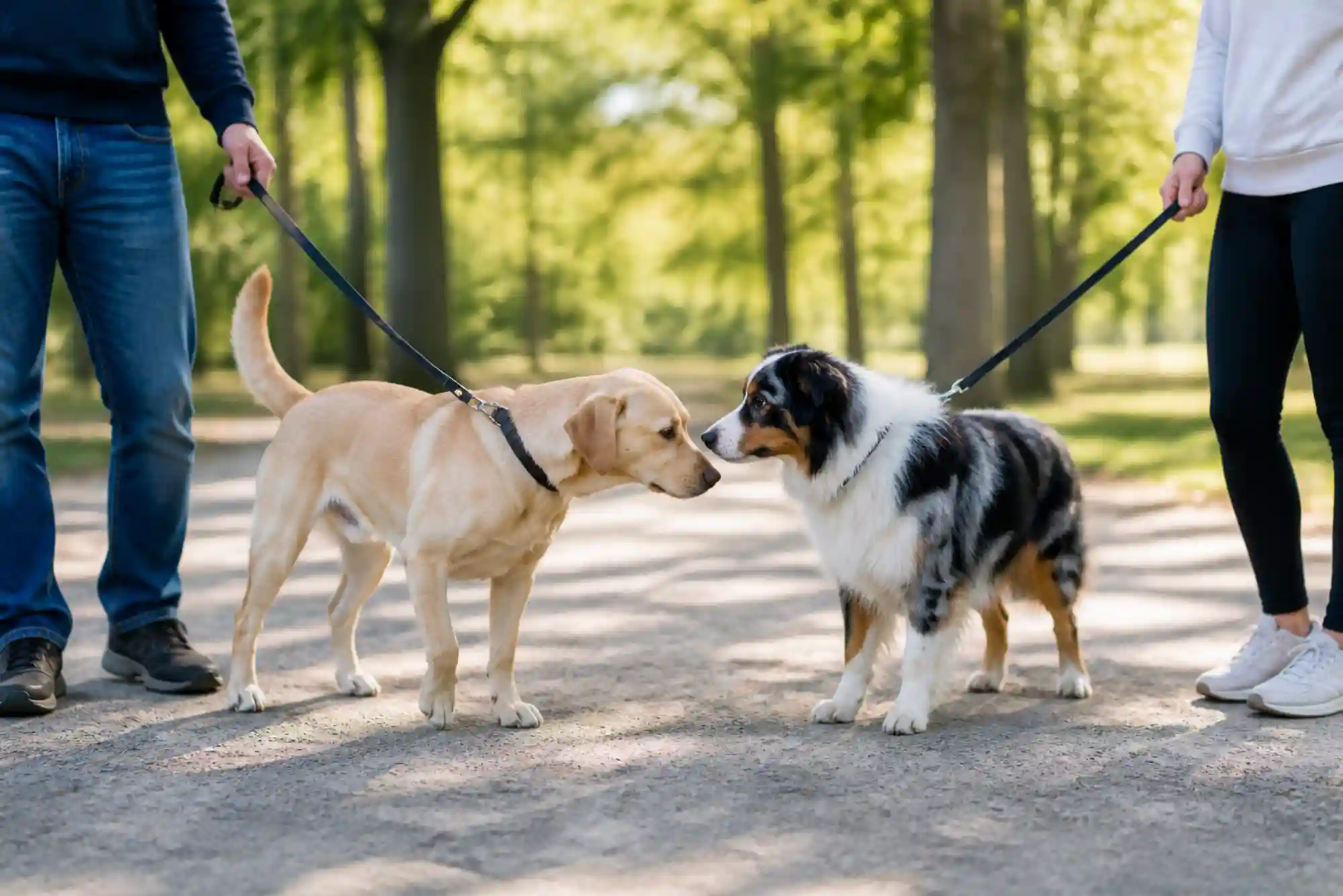
Once both dogs appear relaxed, you can allow a short greeting. Let the dogs approach from an angle rather than forcing a direct nose-to-nose meeting.
Keep the leashes loose when possible. Tight leash pressure can increase frustration or make a dog feel restrained.
Allow a brief sniff, then calmly separate the dogs. Continue walking afterward.
Short interactions are often easier for dogs to manage than prolonged face-to-face contact. You can repeat the process several times if both dogs remain relaxed.
Do not insist on interaction if either dog avoids the other. Avoidance can be useful communication. Giving space can prevent discomfort from escalating.
Read the Dogs’ Body Language
Understanding canine body language is essential when learning how to introduce two adult dogs on neutral territory without fighting.
A relaxed dog usually has loose muscles and natural movement. Its mouth may be slightly open, and its movements may appear flexible.
A dog becoming uncomfortable may suddenly become very still. This freezing behavior deserves attention because it can occur before a stronger reaction.
Other warning signs include prolonged staring, closed mouth, stiff legs, raised tail, lip lifting, growling, or repeated attempts to move away.
Do not punish warning signals such as growling. A growl communicates discomfort or concern. Instead, calmly increase distance and reduce pressure.
The goal is to recognize discomfort early. This allows you to change the situation before either dog feels forced to defend itself.
Keep the First Meeting Short
A successful introduction does not need to last for hours. In fact, shorter sessions can be more productive.
Dogs can become tired or overstimulated during prolonged interactions. Stress may build even when the first few minutes appear positive.
After several calm interactions, end the meeting on a positive note. Both dogs should leave before either becomes overwhelmed.
You can repeat the introduction later. Multiple controlled meetings often provide better results than one lengthy session.
When asking how to introduce two adult dogs on neutral territory without fighting, remember that patience is part of the process.
Avoid Common Introduction Mistakes
One common mistake is forcing dogs to greet each other immediately. Dogs do not need to interact simply because they are in the same area.
Another mistake involves pulling dogs tightly toward one another. Tight leashes can increase frustration and restrict normal communication.
Do not place dogs together around food, toys, beds, or other valuable resources during the first meeting. These items can create unnecessary competition.
It is also important not to punish either dog for showing discomfort. Punishment may suppress warning behavior without addressing the underlying emotion.
Instead, create distance and allow both dogs to recover.
What to Do if the Dogs Become Tense
Even careful introductions can involve moments of tension. The important response is to remain calm and create space.
If either dog begins staring, stiffening, barking, or lunging, do not force the interaction. Move the dogs apart using calm, controlled movements.
Avoid yelling or jerking the leash. These actions can increase excitement and make the situation harder to manage.
Once both dogs have relaxed, you can decide whether to continue. Sometimes ending the session is the safest choice.
If aggressive behavior repeatedly occurs, professional guidance is appropriate. A qualified behavior professional can identify triggers and create a structured introduction plan.
Move Slowly Toward Shared Activities
After several successful meetings, the dogs can gradually spend more time together. Continue using calm walks and controlled outdoor activities.
The next stage can involve walking closer together. Later, you may allow supervised time in a secure environment.
Do not assume that successful outdoor meetings mean the dogs are ready to share everything at home. Household resources can introduce new conflicts.
When eventually bringing the dogs into a home, manage food, toys, sleeping areas, and human attention carefully.
Give each dog its own safe space. This allows either dog to retreat when it needs a break.
Introducing Two Adult Dogs at Home
Although neutral territory is ideal for the first meeting, the dogs may eventually need to share a home. Make that transition gradually.
Before entering the house, consider taking both dogs for another calm walk. Walking together can help maintain the positive association created outside.
Inside, remove high-value items that could cause competition. Keep the environment simple and supervised.
Feed the dogs separately at first. Separate sleeping areas can also reduce pressure during the adjustment period.
Supervise interactions closely during the early stages. Even dogs that appear comfortable outside may behave differently inside.
Gradually increase their freedom as they demonstrate consistent calm behavior.
How Long Does It Take for Adult Dogs to Get Along?
There is no universal timeline for adult dogs. Some dogs become comfortable within several meetings. Others need weeks or longer.
Age, temperament, previous experiences, social skills, environment, and individual preferences can all affect the process.
Therefore, focus on behavior rather than a fixed schedule. Calm body language and relaxed interactions are more useful indicators than the number of days passed.
If progress stops, return to an easier stage. Increasing distance can help prevent setbacks.
Can Two Adult Dogs Become Friends?
Yes, adult dogs can develop positive relationships. However, friendship should not be the only goal.
Some dogs may prefer peaceful coexistence rather than close companionship. That can still be a successful outcome.
The most important goal is creating a safe environment where both dogs can relax.
Understanding how to introduce two adult dogs on neutral territory without fighting means respecting individual boundaries throughout the process.
When Professional Help Is Necessary
Professional help is particularly important when either dog has previously bitten another dog or person. It is also useful when serious lunging or repeated aggressive behavior occurs.
A veterinary behaviorist can evaluate possible medical and behavioral factors. A qualified positive-reinforcement trainer can also help develop safer management strategies.
Do not deliberately test dogs by placing them close together to see what happens. Controlled management reduces unnecessary risk.
Professional support is especially valuable when the dogs must eventually live together.
Frequently Asked Questions
How do you introduce two adult dogs for the first time?
Start on neutral territory with two handlers. Keep the dogs separated initially and use parallel walking. Gradually reduce the distance as both dogs remain relaxed.
How long should dogs meet on neutral ground?
The first meeting can be relatively short. Several calm interactions are generally preferable to one long session. End the meeting before either dog becomes overwhelmed.
Should dogs meet on or off leash?
For most initial introductions, controlled leashes provide safer management. Avoid forcing direct interaction. Off-leash interaction should only happen in a secure environment when appropriate.
What should I do if my dog growls at another dog?
Treat growling as a warning signal. Calmly increase distance rather than punishing the dog. If growling continues, seek professional behavioral guidance.
How do you introduce two dogs without fighting?
Use neutral territory, parallel walking, controlled distance, and short interactions. Monitor body language throughout the process. Never force dogs to interact.
Can two adult dogs learn to live together?
Many adult dogs can learn to coexist successfully. The adjustment period varies between individual dogs. Separate resources and gradual supervision can make the transition easier.
Conclusion
Learning how to introduce two adult dogs on neutral territory without fighting requires patience, preparation, and careful observation. Neutral territory can reduce territorial pressure, while parallel walking allows both dogs to adjust gradually.