Introduction
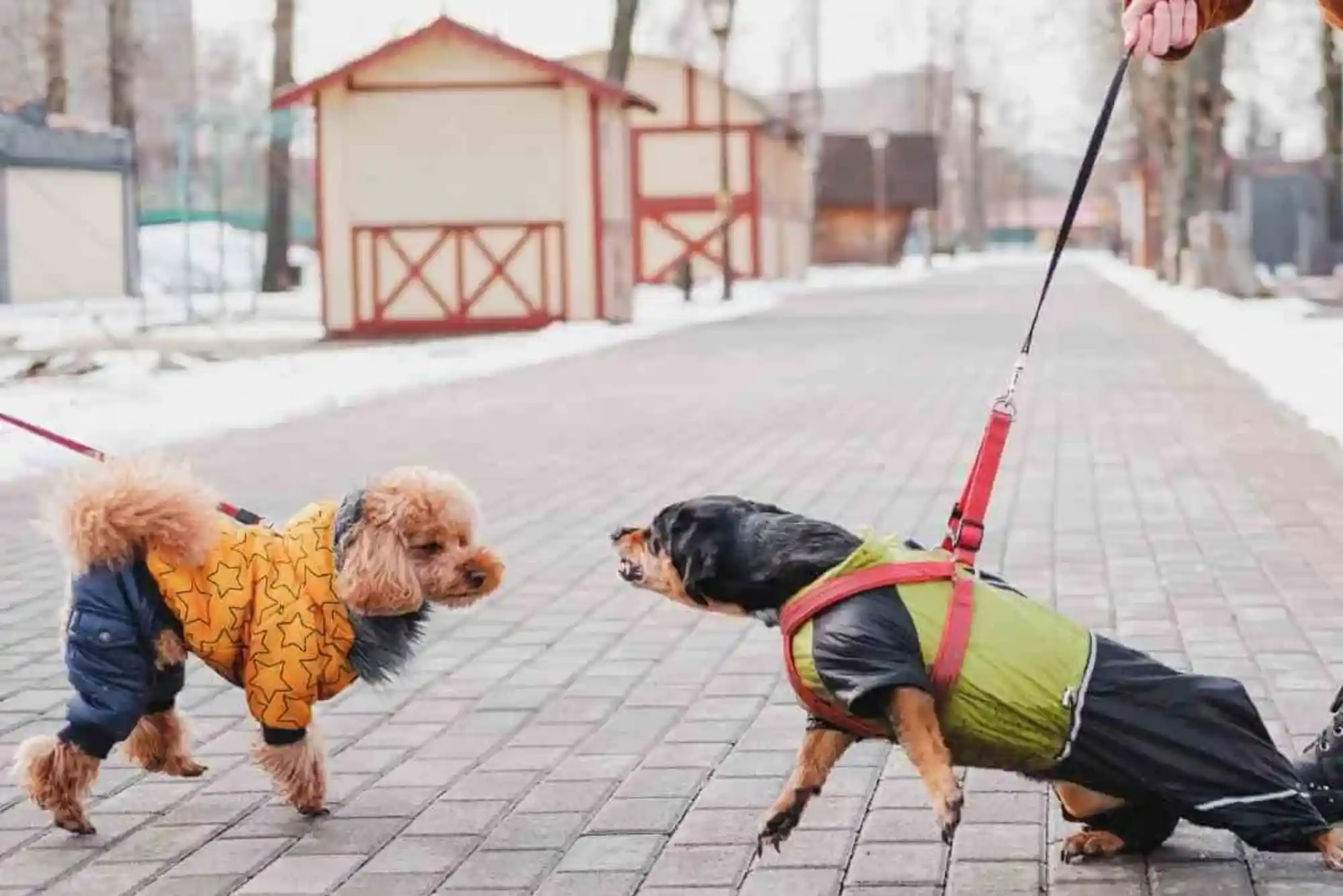
If your dog turns into a barking, pulling, lunging mess whenever another dog appears on a walk, you are not alone. How to stop a dog from barking at other dogs on leash is one of the most common behavior questions dog owners ask.
The important thing is to understand what is happening before trying to suppress the barking. Leash reactivity is not necessarily the same as aggression. Some dogs bark because they are frightened. Others become frustrated because they want to greet the other dog but cannot. Some are simply overwhelmed by excitement or previous experiences.
The solution is usually not to force the dogs closer together. Instead, effective reactivity training changes the dog’s emotional response through careful management, distance, desensitization, and positive reinforcement. Veterinary behavior resources specifically recommend management alongside desensitization and counterconditioning for fearful or reactive dogs.
Why Dogs Bark at Other Dogs on Leash
Before learning how to stop a dog from barking at other dogs, identify what may be driving the behavior. The same barking can have different causes, so watching your dog’s body language matters.
Fear-Based Leash Reactivity
A fearful dog may bark or lunge because another dog feels threatening. The behavior can function as a distance-increasing strategy: the dog reacts, the approaching dog continues past, and your dog learns that barking appears to make the uncomfortable situation disappear.

Look for signs such as a stiff body, tucked or lowered tail, pinned ears, avoidance, freezing, lip licking, or attempts to move away.
This does not automatically mean your dog is aggressive. Reactivity describes the visible response, while the underlying emotion can be fear, frustration, excitement, or another factor.
Frustrated Greeting
Some dogs genuinely enjoy other dogs but become frustrated when a leash prevents them from approaching.
These dogs may pull forward, whine, bark, bounce, or wag their tails intensely. The problem can become a learned pattern when every walk repeatedly produces the same excitement without teaching the dog an alternative response.
The American Kennel Club notes that leash restraint can contribute to barking when dogs cannot greet, investigate, or move away normally.
Overexcitement and Poor Impulse Control
Not every reactive dog is fearful. Some become overstimulated simply because another dog is highly exciting.
The goal remains similar: prevent your dog from reaching the point where thinking becomes difficult, then reward calm behavior around the trigger.
How to Stop a Dog from Barking at Other Dogs
The most important principle is simple: train below your dog’s reaction threshold.
Your dog’s threshold is the distance at which they can notice another dog without exploding into barking or lunging. For one dog, that might be 50 feet. For another, it might be much farther.
You do not need to guess the perfect distance immediately. Observe your dog carefully and adjust.
Find Your Dog’s Threshold Distance
Choose an open area where you can see other dogs without being forced into close encounters.
When your dog notices another dog, watch what happens.
If your dog can look at the other dog, take a treat, respond to their name, and turn back toward you, you may be at a workable distance.
If your dog freezes, stares intensely, stops eating, pulls hard, barks, or lunges, increase the distance.
A dog that cannot think clearly is not in a good position to learn a new behavior. Working farther away is not avoiding training. It is creating the conditions that make training possible.
Use Distance as a Training Tool
Distance is one of the most useful tools in leash-reactivity training.
If another dog suddenly appears around a corner, calmly create space. Cross the street, turn around, step behind a parked vehicle, or move into a driveway if appropriate.
The American Veterinary Society of Animal Behavior recommends management strategies that reduce exposure to situations likely to trigger fearful dogs while behavior modification is taking place.
This matters because repeatedly allowing your dog to practice explosive reactions can make the behavior harder to change. In some cases, repeated exposure can increase sensitivity rather than produce calmness.
Start Desensitization and Counterconditioning
Desensitization means exposing your dog to a trigger at an intensity they can handle. Counterconditioning means pairing that trigger with something positive.
Together, these techniques can help change the dog’s emotional association with other dogs.
Reward the Moment Your Dog Notices
Suppose your dog sees another dog 40 feet away and remains calm.
The instant your dog notices the other dog, calmly mark the moment with a word such as “yes,” then offer a high-value treat.
Repeat the process while the other dog remains at a safe distance.
You are teaching:
“Seeing another dog makes good things happen.”
Over time, your dog can begin to look at the trigger and then check back with you instead of immediately barking.
Practice the Engage-Disengage Pattern
A useful exercise is to teach your dog that noticing another dog does not require staring.
Your dog looks at the other dog.
You mark the calm observation.
Your dog receives a treat.
Eventually, your dog begins looking back toward you voluntarily.
Do not rush the process by moving closer simply because your dog succeeded once. Build several successful repetitions first. Then make the environment slightly more challenging.
Best Friends Animal Society similarly recommends beginning at a distance where the dog notices the trigger without reacting and then reinforcing attention and calm behavior.
Teach an Alternative Behavior
Stopping barking becomes easier when your dog has something else to do.
Instead of expecting your dog to simply “ignore” another dog, teach a behavior that is physically and mentally incompatible with an explosive reaction.
Train a Reliable “Look at Me”
Practice this at home before using it around dogs.
Say your dog’s name.
When they look at you, reward them.
Repeat until looking toward you becomes automatic.
Then practice in increasingly distracting environments.
The goal is not to use the cue as an emergency command after your dog has already exploded. Build the behavior when your dog is calm so it becomes useful when distractions appear.
Teach a U-Turn
A cheerful U-turn can be extremely useful during walks.
Practice turning around with your dog before you encounter any triggers. Use a verbal cue, turn with your dog, and reward them for following.
When another dog unexpectedly appears too close, you can use the practiced movement to create distance without dragging your dog away.
This is especially valuable because real walks rarely go exactly according to plan.
Use the Right Equipment
Training is the foundation, but appropriate equipment can make management safer.
A secure, comfortable harness or well-fitted collar should allow you to maintain control without relying on painful corrections.
A standard leash can also give you more predictable handling than a retractable leash during reactive-dog training.
Equipment does not eliminate the emotional reason for barking. It simply helps you manage the situation while teaching a better response.
If your dog has a bite history or you are concerned about safety, discuss appropriate equipment and behavior modification with a qualified veterinary behavior professional rather than attempting close interactions yourself.
What Not to Do When Your Dog Barks
One of the biggest mistakes owners make is waiting until the dog is already overwhelmed and then trying to correct the behavior.
Yanking, shouting, or repeatedly punishing the dog can add stress to an already difficult situation. It also does not teach the dog what to do instead.
Another common mistake is deliberately putting the dog close to other dogs to “get them used to it.” This can backfire when the exposure is too intense. AVSAB notes that desensitization needs to proceed at the dog’s pace and is not an instant fix.
Avoid forcing greetings.
Avoid allowing unknown dogs to rush directly toward your reactive dog.
Avoid testing your dog’s limits repeatedly.
Instead, protect the training process and create opportunities for successful repetitions.
Create a Practical Reactivity Protocol
A consistent routine is easier to follow than improvising every time another dog appears.
Before the Walk
Choose a quieter route when possible.
Bring exceptionally motivating treats.
Use secure walking equipment.
Start when your dog is relatively calm rather than already highly stimulated.
Know where you can create distance if another dog approaches.
When You See Another Dog
Notice the trigger before your dog reaches full arousal.
Create enough distance for your dog to remain responsive.
Allow your dog to look at the other dog.
Mark calm observation.
Deliver several small treats while the trigger remains at a manageable distance.
If your dog becomes tense or stops responding, increase distance.
After the Encounter
Give your dog time to decompress.
Do not immediately search for another dog to practice with.
Keep sessions short enough that your dog can finish successfully.
A successful session may involve only a handful of calm observations. More repetitions are not automatically better.
How Long Does Leash Reactivity Training Take?
There is no universal timeline.
Some dogs show noticeable changes relatively quickly. Others need weeks or months of careful practice, particularly when fear, previous negative experiences, or strong habits are involved.
Progress should not be measured only by whether your dog barked.
You might first notice that your dog recovers faster. Later, the barking may become quieter or shorter. Eventually, your dog may notice another dog and voluntarily turn toward you.
These changes are meaningful because they show that the dog’s response is becoming more manageable.
Avoid comparing your dog with another reactive dog. Each dog has a different history, threshold, temperament, environment, and learning speed.
When to Get Professional Help
Professional help is particularly important when your dog has attempted to bite, has caused an injury, redirects aggression toward the handler, or becomes impossible to control around triggers.
A veterinarian can also help determine whether pain or another medical factor could be contributing to a sudden behavior change.
For serious cases, look for a qualified veterinary behavior professional or an experienced reward-based behavior consultant who can evaluate your dog in context.
Do not deliberately expose a dog with significant aggression or bite risk to unfamiliar dogs simply to test progress.
FAQs
How do I stop my dog from barking at other dogs on a leash?
Start by identifying the distance at which your dog can notice another dog without reacting. Reward calm observation at that distance, then gradually build toward closer encounters. Management, desensitization, and counterconditioning are commonly used approaches for leash reactivity.
Why does my dog bark at other dogs when on leash but not off leash?
The leash can restrict your dog’s ability to approach, retreat, or interact normally. Some dogs become frustrated because they want to greet another dog, while others feel trapped and react to increase distance.
Should I punish my dog for barking at other dogs?
Punishment does not teach the dog an appropriate alternative behavior and can add pressure to an already stressful situation. A training plan based on distance, management, and reinforcement can instead teach the dog what to do when another dog appears.
How far away should I be from another dog during reactivity training?
There is no universal distance. Start far enough away that your dog can notice the other dog while still taking food and responding to you. That distance may change depending on the environment, the other dog’s behavior, and your dog’s stress level.
Can a reactive dog be trained to ignore other dogs?
Many reactive dogs can learn to respond more calmly around other dogs, but “ignore” should not be the only goal. A more realistic objective is teaching the dog to notice another dog, remain under threshold, disengage, and return attention to the handler.
How long does it take to stop leash reactivity?
The timeline varies considerably. Progress depends on the cause of the reaction, the dog’s history, training consistency, trigger distance, and the individual dog. Focus on gradual improvement rather than expecting an immediate cure.
Learning how to stop a dog from barking at other dogs on leash starts with changing the way you approach the problem. Instead of treating barking as simple disobedience, look at the emotion behind it and identify the distance where your dog can still think and learn.
Use management to prevent unnecessary explosions. Then practice calm observation, reward disengagement, teach alternative behaviors, and gradually increase difficulty.
Most importantly, be patient. Leash reactivity is a behavior pattern, not a switch that can be turned off during one walk.