
Introudction
Finding the right harness for a large dog is about more than choosing something that looks rugged. Strong dogs can place considerable force on straps, buckles, stitching, and leash attachment points. Service dogs also have different handling requirements depending on whether they provide mobility assistance, guiding support, public-access work, or everyday task assistance.
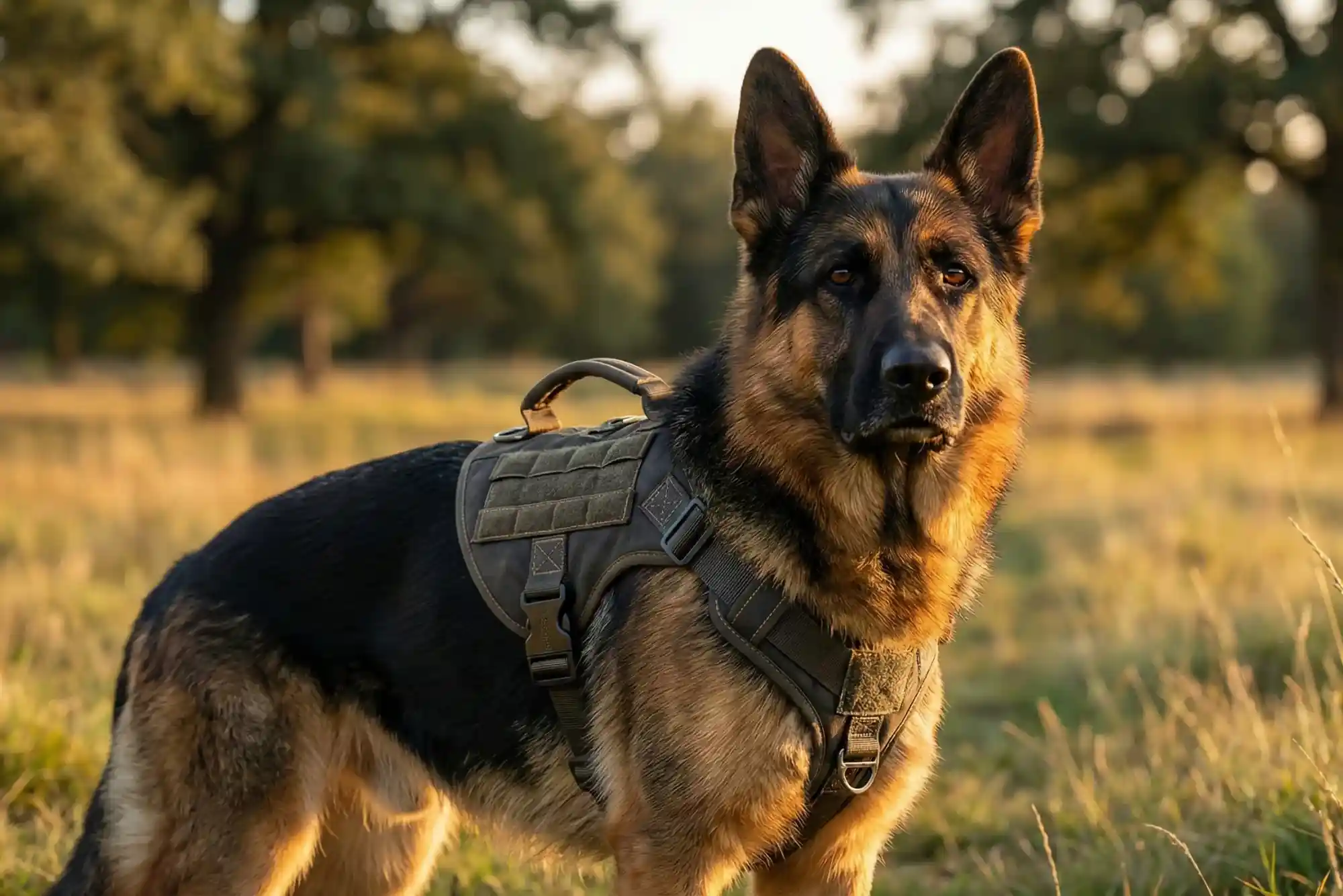
That is why the best tactical dog harnesses with handle should be evaluated for construction, fit, control, comfort, and the actual job the dog performs. Features such as MOLLE webbing and hook-and-loop panels can be useful, but they should not distract from the fundamentals.
A well-designed tactical harness can provide a convenient control point, distribute leash pressure across the dog’s body, and give handlers space for identification patches or lightweight equipment. However, a grab handle is not automatically a lifting handle, and a tactical appearance does not guarantee that a harness is suitable for mobility assistance.
What Makes the Best Tactical Dog Harnesses With Handle Different?
Tactical dog harnesses are generally designed around durability and control. Many use materials such as high-denier nylon, reinforced webbing, padded chest sections, multiple adjustment points, and metal or reinforced buckles.
The biggest advantage of a top handle is immediate physical control. A handler can quickly hold the dog close when moving through a crowded area, crossing a road, entering an elevator, or navigating a narrow space.
Some harnesses also include front and rear leash attachment points. These can provide greater flexibility during training and normal walks. Research published in 2026 comparing tactical harnesses highlights differences in materials, hardware, attachment points, handles, and MOLLE systems across current models.

For large breeds, these details matter because a harness needs to remain stable when the dog changes direction or pulls suddenly. A loose or poorly shaped harness can rotate, rub behind the front legs, or allow an escape-prone dog to back out.
Why Large Breeds Need a Properly Designed Harness
Large dogs create different mechanical demands than small dogs. A 30-pound dog and a 90-pound German Shepherd may both wear a “large” harness according to one manufacturer, but their body shapes and handling requirements can be completely different.
Large breeds often have deep chests, powerful shoulders, and substantial neck and girth measurements. A good harness should therefore be selected according to actual measurements rather than breed name alone.
The chest or girth measurement is particularly important. Current harness research recommends measuring around the dog’s chest, generally behind the front legs, before choosing a size.
Adjustment points are equally important. A harness with several adjustment locations can be easier to fit around a deep chest while keeping the straps away from sensitive areas.
A useful fit should be secure without restricting normal movement. You should be able to place approximately two fingers beneath properly adjusted straps, while checking regularly for rubbing, pressure points, or looseness.
Handle Design Matters More Than Appearance
One of the most attractive features of a tactical harness is the top handle. It looks practical, and it often is, but handlers should understand what the handle is actually designed to do.
A control handle is useful for briefly holding a dog close. It can help when stepping into a vehicle, navigating crowds, preventing a dog from moving toward a distraction, or quickly repositioning the dog.
It should not automatically be treated as a lifting device.
Some specialized assistance harnesses are specifically designed with reinforced mobility handles or support structures. Other tactical harnesses simply provide a sewn grab handle for short-term control.
This distinction is especially important for service dogs. If a dog is expected to provide physical support for a person’s weight, the harness should be specifically designed and manufacturer-approved for that purpose. A generic tactical grab handle should not be assumed to safely support human body weight.
Current service-harness research also emphasizes the difference between a harness with a guide or lift handle and an ordinary vest with identification patches.
MOLLE Webbing and Patch Panels: Are They Useful?
MOLLE webbing is one of the defining features of many tactical-style dog harnesses. It allows compatible pouches and accessories to be attached to the harness.
For working dogs, this can be useful. A handler may want to carry lightweight identification equipment, a small waste-bag holder, communication accessories, or other compact items.
However, more MOLLE does not necessarily mean a better harness.
Additional equipment also adds weight. Dogs working in hot weather can become uncomfortable when covered in heavy nylon and accessories. The dog’s comfort should therefore remain more important than maximizing the number of attachments.
Hook-and-loop panels are another useful feature for service dogs and working dogs. They provide a convenient surface for removable identification patches.
It is important to remember that wearing a “service dog” patch does not itself establish service-animal status or public-access rights. The harness is equipment, not legal certification. A recent service-harness review makes the same distinction, noting that handlers generally choose harnesses for practical features rather than because a particular vest creates legal rights.
Best Tactical Dog Harnesses With Handle for Service Dogs
Service dogs require a more careful approach because the harness should match the dog’s specific work.
For ordinary public-access handling, a durable harness with a comfortable handle, secure fit, and identification panel may be sufficient. A handler may value a low-profile design that does not interfere with movement.
For mobility assistance, the requirements can be much more specialized.
A mobility-assistance dog may need equipment that accommodates guiding, counterbalance, or other trained tasks. Those activities can place forces on the harness that an ordinary tactical vest was never designed to handle.
For this reason, service-dog handlers should distinguish between a tactical harness intended for control and a purpose-built assistance harness intended for physical support.
Some current products illustrate the difference. The Ruffwear Web Master, for example, has multiple adjustment points, several leash attachment options, and a padded lift handle, while specialized assistance harnesses may use purpose-built handles or reinforced structures.
The correct choice ultimately depends on what the dog is trained to do.
Materials to Look for in a Tactical Harness
Durability begins with materials, but material names alone do not tell the whole story.
Many tactical dog harnesses use 1000D nylon or similar heavy-duty fabrics. These materials can resist abrasion and withstand demanding outdoor use. Other designs use lighter materials to improve ventilation and reduce overall weight.
A heavy fabric can be useful for hiking, training, and working environments, but it can also feel bulky on a dog that spends most of the day indoors.
Webbing and stitching deserve just as much attention as the outer fabric. Stress points around handles, leash rings, and buckles should have strong reinforcement.
Metal hardware can provide additional durability, although it may increase weight. Some current tactical models use metal buckles alongside reinforced nylon construction, while others use combinations of metal and plastic components.
The best approach is to consider the complete construction rather than choosing a harness solely because it says “military-grade.”
Leash Attachment Points and No-Pull Features
Many tactical harnesses provide multiple leash attachment points. A rear attachment is convenient for everyday walking, while a front attachment can offer another option during training.
However, a front attachment point does not magically stop pulling.
A dog that pulls strongly may still require structured training and behavior modification. The harness is a handling tool, not a replacement for training.
For dogs that are reactive, easily distracted, or powerful enough to pull their handler off balance, professional training can be especially valuable. The harness should make handling more manageable without relying on equipment to solve the underlying behavior.
A tactical harness can also be useful for short-term close control. The handle allows the handler to keep a dog nearby without grabbing at the collar or reaching awkwardly for the leash.
Comfort Should Never Be Sacrificed for Durability
It is easy to focus on heavy-duty materials when shopping for a large-breed harness. Yet comfort can determine whether the dog actually accepts the equipment.
Look closely at the chest area, shoulder clearance, padding, and strap placement.
A harness that sits directly behind the dog’s front legs can cause rubbing. Excessively tight straps can create pressure points. A loose harness can shift sideways or potentially allow an escape.
Breathability also matters in warm environments. Thick tactical materials may become uncomfortable during extended outdoor use, particularly when combined with MOLLE pouches or other accessories.
For dogs living in hot climates, a lighter and more breathable harness may be more practical than the heaviest available design.
How to Measure a Large Dog for a Tactical Harness
Correct measurement is one of the most important steps before buying any harness.
Use a flexible measuring tape and measure around the widest part of your dog’s chest, normally just behind the front legs. Keep the tape snug without compressing the coat or body.
Compare that measurement with the manufacturer’s official size chart.
Do not assume that one company’s Large is equivalent to another company’s Large. Published size ranges can vary significantly. For example, current models reviewed in 2026 show substantial differences in their listed girth ranges, with some designs covering approximately 13 to 42 inches and others covering narrower ranges.
If your dog falls between sizes, pay close attention to the manufacturer’s instructions. Some harnesses offer enough adjustment to accommodate a borderline measurement, while others have a more limited fitting range.
After putting the harness on, check it again after your dog walks, sits, lies down, and changes direction.
Common Mistakes When Buying a Tactical Dog Harness
One common mistake is choosing a harness because it looks strong in photographs. Appearance can be misleading. Stitching, hardware, adjustment range, and construction around the handle matter much more.
Another mistake is selecting a size based only on weight. Weight can help narrow the options, but chest girth and body shape are more useful for achieving the correct physical fit.
Some owners also assume that a tactical harness automatically provides escape-proof protection. It does not. A determined dog with the wrong fit may still slip out.
Another frequent mistake is overloading MOLLE panels. A harness may technically accept several pouches, but that does not mean the dog should carry a large amount of equipment.
Finally, avoid using an ordinary grab handle for human weight-bearing tasks unless the manufacturer specifically designed and approved it for that purpose.
How to Maintain a Tactical Dog Harness
Even a heavy-duty harness needs regular inspection.
Check the stitching around the handle and leash attachment points. Examine buckles for cracks or deformation. Look at the webbing for fraying and inspect the underside for areas where dirt or moisture may have accumulated.
Wash the harness according to the manufacturer’s instructions. Harsh cleaning chemicals can damage certain fabrics, coatings, or webbing.
It is also worth checking the fit periodically. Dogs can gain or lose weight, develop more muscle, or change body shape. Puppies can outgrow harnesses surprisingly quickly.
A harness that fitted perfectly several months ago may no longer be correctly positioned.
Are Tactical Harnesses Good for Everyday Walking?
They can be, but it depends on the dog and the harness.
For an active large breed that regularly hikes, trains, travels, or needs close handling, a tactical harness can be practical. The handle and multiple attachment options can make everyday situations easier.
For a calm dog that simply takes short neighborhood walks, a heavy tactical vest may provide more equipment than necessary.
The goal should not be to buy the most rugged harness available. It should be to buy equipment that matches the dog’s actual needs.
Choosing the Right Tactical Harness
The best tactical dog harnesses with handle are not necessarily the largest, heaviest, or most tactical-looking models. The right harness is the one that fits the dog securely, supports the intended activity, provides useful control, and remains comfortable during real-world use.
For large breeds, prioritize accurate chest measurement, strong construction, stable adjustment, and reliable hardware. For service dogs, consider the dog’s actual working tasks rather than simply choosing a vest labeled “service.” And if the dog performs mobility-related work, use equipment specifically designed for that purpose instead of assuming a standard tactical grab handle can provide weight-bearing support.
Take your dog’s measurements, identify how you will use the harness, and compare the manufacturer’s specifications before purchasing. With the right fit and design, a tactical harness can become a practical piece of everyday equipment for training, outdoor activities, working dogs, and responsible service-dog handling.
FAQs
What is the best tactical dog harness with a handle?
The right choice depends on your dog’s size, body shape, activity level, and the reason you need the harness. Models from brands such as OneTigris, Ruffwear, Julius-K9, and Ray Allen offer different combinations of handles, adjustment systems, leash attachment points, and tactical features. Current product comparisons show that these designs are intended for different use cases rather than one universal purpose.
What is the strongest tactical dog harness for large dogs?
Strength depends on more than the fabric. Buckle construction, webbing, stitching, leash rings, and handle reinforcement all matter. Large-dog models using heavy-duty nylon and reinforced hardware are generally designed for demanding handling, but buyers should follow the manufacturer’s stated limitations rather than assuming a harness can support any load.
Are tactical dog harnesses good for German Shepherds?
Many tactical harnesses are suitable for German Shepherds because their deep chests and active lifestyles can benefit from adjustable designs, strong attachment points, and a control handle. However, the harness must be sized using the dog’s actual chest measurement. Breed alone should not determine the size.
Can I use a tactical dog harness for a service dog?
Yes, a tactical harness can be used by some service-dog handlers when its design fits the dog’s work. A harness can provide identification panels and convenient control. However, the presence of a service-dog patch does not itself establish service-animal status or legal access rights.
Can a dog harness handle support a person’s weight?
Not necessarily. A standard tactical grab handle is normally intended for controlling or repositioning the dog. It should not be used for human weight-bearing or mobility assistance unless the harness is specifically designed and rated for that purpose.
Is MOLLE useful on a dog harness?
MOLLE can be useful for attaching lightweight accessories, identification equipment, and small pouches. It becomes less practical when excessive gear adds unnecessary weight or heat. For most companion dogs, less equipment is often more comfortable.
How tight should a tactical dog harness be?
The harness should be secure without restricting movement or creating pressure points. As a general fitting check, you should usually be able to place about two fingers beneath the straps. Always follow the manufacturer’s specific fitting instructions because harness designs vary.
What should I look for in a tactical dog harness for a large breed?
Focus on accurate sizing, strong stitching, reliable buckles, reinforced leash attachment points, a properly constructed handle, adequate adjustment, comfortable chest coverage, and appropriate weight. For hot climates or long outdoor sessions, ventilation should also be considered.