
Introduction
International travel with a dog requires more planning than a normal flight. Airlines have different pet policies, while destination countries have their own entry requirements. Therefore, understanding the rules before booking your ticket can prevent expensive delays and stressful problems.
If you are wondering How to Fly Internationally with a Dog: Cabin Dimensions, Pet Passports, and IATA Rules, start by checking three things. First, confirm that your airline accepts dogs on your route. Next, check the destination country’s veterinary and import requirements. Finally, prepare a compliant carrier and the required health documents.
The process becomes much easier when you plan several weeks ahead. Your dog’s microchip, vaccinations, health certificate, carrier, and airline reservation may all need attention. Some destinations also require treatments or quarantine arrangements.
How to Fly Internationally with a Dog Safely
The first step is researching both the airline and destination country. Never assume that an airline’s general pet policy applies to every international route.
Some airlines allow small dogs in the passenger cabin. Others accept pets only as checked baggage or cargo. Certain routes may restrict pets completely.
Before purchasing a ticket, contact the airline directly. Ask whether dogs are accepted on your specific flight and whether a pet reservation is required.

It is also important to confirm your dog’s size and carrier requirements. A dog that qualifies for cabin travel with one airline may not qualify with another.
When planning How to Fly Internationally with a Dog: Cabin Dimensions, Pet Passports, and IATA Rules, consider the entire journey. A connecting airport may have separate restrictions. The final destination may also require additional documentation.
What Size Carrier Is Allowed in the Cabin?
Cabin carrier dimensions depend on the airline and aircraft. There is no single international cabin size that applies to every carrier.
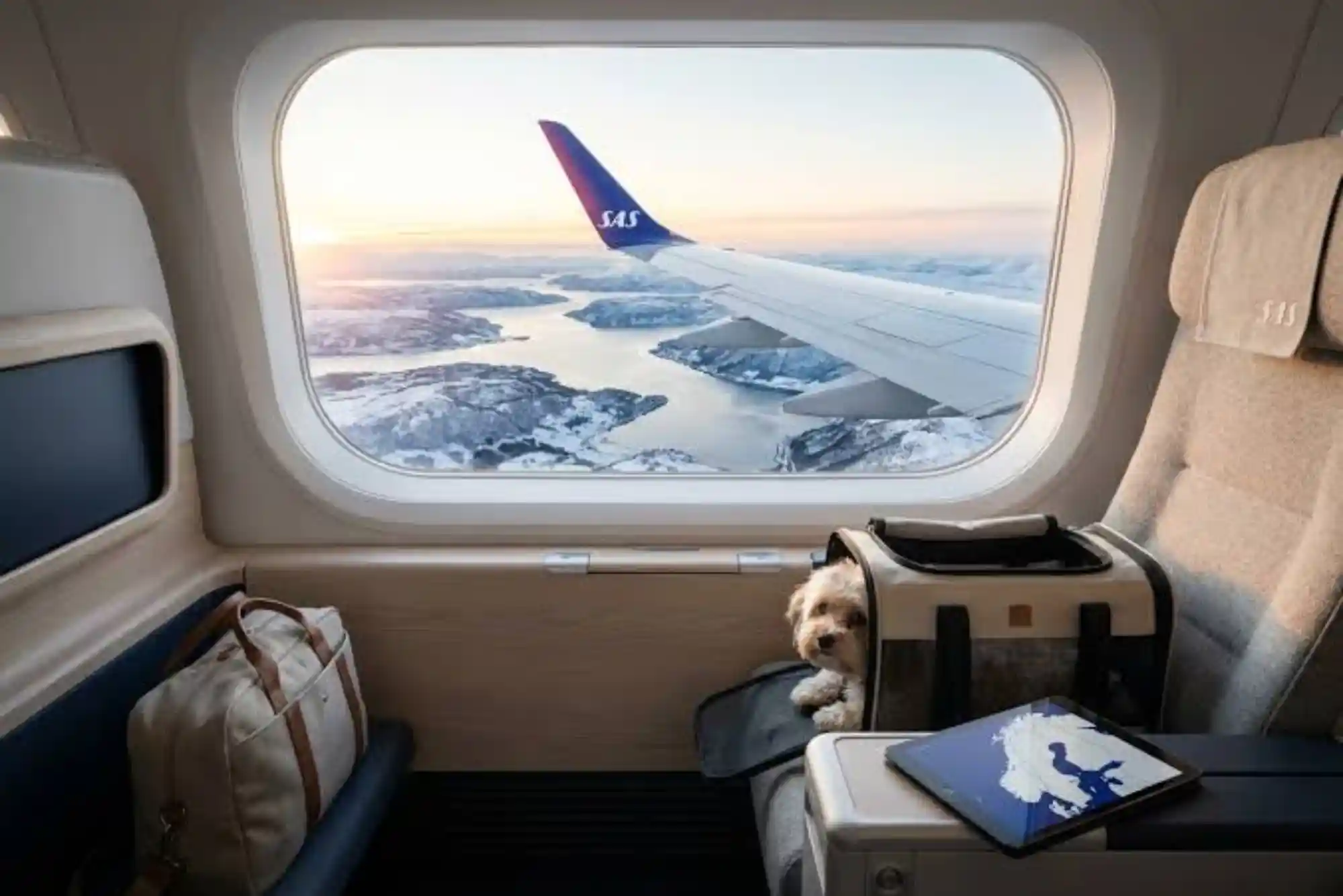
Most airlines require a soft-sided carrier that fits underneath the seat. The carrier must usually allow adequate ventilation and secure containment.
Your dog generally needs to remain inside the carrier during the flight. The carrier should therefore be large enough for your dog to remain reasonably comfortable while meeting the airline’s maximum dimensions.
Before buying a carrier, check the airline’s exact measurements. Do not rely only on a product description saying that the carrier is “airline approved.”
The under-seat space can also vary by aircraft. A carrier that fits one aircraft may not fit another.
Why Carrier Measurements Matter
Airline staff may inspect your carrier before boarding. If it exceeds the permitted dimensions, your dog may not be accepted in the cabin.
Measure the carrier’s length, width, and height carefully. Also check the carrier’s weight when combined with your dog.
Some airlines impose a maximum combined weight for the pet and carrier. Others focus mainly on carrier dimensions and whether the animal can remain safely contained.
Therefore, confirm every requirement before traveling.
Do Dogs Need a Pet Passport for International Travel?
A pet passport is not universally required. Requirements depend on the country you are entering and sometimes on your departure country.
A pet passport may contain information about your dog’s identity, microchip, vaccinations, and veterinary treatments. In some regions, an official veterinary certificate or government-endorsed health certificate is required instead.
The most important point is that a document called a “pet passport” does not automatically satisfy every country’s rules.
For example, a destination may require a specific import certificate. It could also require proof of a rabies vaccination, an approved microchip, or a parasite treatment.
Always check the official requirements for your destination before traveling.
Microchipping Your Dog
Many international destinations require dogs to have an identifiable microchip. The microchip number must match the animal’s travel documents.
The timing can also matter. In some cases, the microchip must be implanted before the qualifying rabies vaccination.
This is why you should not leave documentation until the final week.
Ask your veterinarian to verify that the microchip can be read and that the number is recorded correctly on all required paperwork.
Rabies Vaccination and International Dog Travel
Rabies vaccination is one of the most common requirements for international dog travel. However, countries differ in their vaccination rules.
Some destinations require dogs to be vaccinated after microchipping. Others require a waiting period following vaccination before entry.
Certain countries also require a rabies antibody blood test. If this applies, the process can take considerably longer.
For this reason, check the destination requirements before making travel arrangements. Your veterinarian can help you understand the medical timeline, but the destination authority determines its entry rules.
Keep the original vaccination records and copies of important documents with you.
What Is an International Health Certificate?
An international health certificate confirms that a veterinarian has examined your dog and that the animal meets specific travel requirements.
The exact certificate depends on the destination. Some countries accept government-approved veterinary certificates. Others require official endorsement by the relevant authority.
Timing is particularly important. A certificate issued too early may become invalid before your arrival.
Likewise, waiting too long can leave insufficient time for government endorsement or corrections.
Ask your veterinarian about the certificate well before departure. Then confirm the acceptable format with the destination country’s official authority.
Understanding IATA Rules for Flying With Dogs
The International Air Transport Association, commonly known as IATA, provides guidance for the safe transportation of live animals.
IATA’s Live Animals Regulations cover areas such as animal containers, ventilation, handling, and transport conditions.
However, IATA guidance does not replace airline rules or government entry requirements.
When researching How to Fly Internationally with a Dog: Cabin Dimensions, Pet Passports, and IATA Rules, treat these as three separate layers.
The destination country determines entry requirements. The airline determines its transport policy. IATA provides internationally recognized guidance for animal transportation.
Your dog must satisfy the requirements that apply to your particular journey.
IATA-Compliant Travel Containers
For dogs traveling in the aircraft hold or as cargo, the container must meet applicable requirements.
The container should provide appropriate ventilation and secure construction. It should also provide enough space for the dog to stand, turn around, and lie down naturally.
Food and water arrangements may also be required for longer journeys.
Do not assume that a standard plastic kennel is automatically suitable. Check the airline’s current container requirements before purchasing one.
Cabin Travel vs. Cargo Travel
Small dogs are sometimes permitted in the cabin when they meet airline requirements. Larger dogs may need to travel in the aircraft hold or through an airline’s cargo service.
Cabin travel can involve fewer handling stages. However, availability is often limited, and restrictions can apply to specific routes or aircraft.
Cargo travel involves additional preparation. The kennel, labeling, documentation, and handling arrangements become especially important.
Temperature restrictions can also affect animal transportation. Airlines may limit transportation during periods of extreme heat or cold.
Therefore, check seasonal restrictions before choosing your flight.
How Early Should You Prepare for an International Dog Flight?
Start preparing as soon as you know that your dog will travel.
Some requirements can take weeks or months. Rabies vaccinations, antibody testing, waiting periods, government endorsements, and import permits can all affect your timeline.
A practical approach is to create a travel checklist based on your destination.
First, identify the official import requirements. Then speak with your veterinarian. After that, confirm the airline’s pet policy and reserve your dog’s space.
Finally, verify every document shortly before departure.
This approach reduces the risk of discovering an overlooked requirement at the airport.
Preparing Your Dog for the Flight
Travel preparation should involve more than paperwork. Your dog also needs to become comfortable with the travel carrier.
Introduce the carrier at home well before your trip. Leave it open and allow your dog to investigate it voluntarily.
You can gradually encourage your dog to rest inside. Short practice sessions can help make the carrier feel familiar.
Avoid making the carrier a last-minute experience. A dog encountering it for the first time at the airport may become unnecessarily stressed.
You should also maintain your dog’s normal feeding and exercise routine as much as practical before traveling.
Should You Give Your Dog a Sedative?
Do not give your dog a sedative simply because you are worried about flying.
Sedation can affect an animal’s ability to respond normally to changes during transportation. Always discuss medication with your veterinarian before travel.
Airlines may also have policies concerning sedated animals.
Your veterinarian can assess your individual dog’s circumstances and provide appropriate advice.
What Should You Bring to the Airport?
Keep important travel documents easily accessible. Do not place essential paperwork inside checked luggage.
Carry your dog’s vaccination records, health certificate, identification information, and any required permits.
It is also sensible to carry copies of important documents. Digital copies stored securely can provide an additional backup.
Arrive early enough to complete the airline’s pet check-in process. Pet travelers may need additional procedures compared with passengers traveling without animals.
Before leaving for the airport, confirm the flight status and airline’s latest pet instructions.
Common Mistakes When Flying Internationally With a Dog
One common mistake is booking a flight before checking pet availability. A passenger ticket does not necessarily guarantee a pet space.
Another mistake is assuming that all airlines follow the same carrier dimensions. They do not.
Travelers also sometimes confuse a pet passport with a universal international travel document. Entry requirements vary between countries.
Ignoring connecting-country rules can create another problem. Your dog may need documentation even when your final destination has different requirements.
Finally, waiting until the last minute can make the process unnecessarily difficult.
Good preparation is therefore one of the most important parts of international pet travel.
Frequently Asked Questions
Can I take my dog on an international flight?
Yes, depending on the airline, route, aircraft, dog size, and destination requirements. Some airlines permit small dogs in the cabin, while larger dogs may require another transport option.
What size dog can fly in the cabin?
There is no universal international weight or size limit. Airlines set their own rules. Many require the dog and carrier to fit beneath the passenger seat.
Do dogs need passports to fly internationally?
Not always. Some countries use pet passports, while others require official health certificates or import documents. Check the destination country’s current requirements.
What documents does my dog need to fly internationally?
Requirements vary. Common documents include microchip identification, rabies vaccination records, health certificates, and import permits when applicable.
How do I prepare my dog for an international flight?
Start early. Confirm entry requirements, visit your veterinarian, prepare the carrier, and help your dog become comfortable inside it before traveling.
Are IATA rules mandatory for every dog flight?
IATA provides internationally recognized guidance for transporting live animals. However, airlines and governments establish the specific requirements applicable to your journey.
Conclusion
Learning How to Fly Internationally with a Dog: Cabin Dimensions, Pet Passports, and IATA Rules requires careful attention to several different requirements. Airline policies, government regulations, veterinary documentation, and animal-transport guidance all matter.