
Understanding the Ideal Gas Law is not just a chemistry requirement—it’s a gateway to innovation in energy, engineering, research, and modern-day technology solutions across Pakistan, the Middle East, and beyond. Whether you’re a high school student in Lahore, a chemical engineer in Dubai, or a research trainee at Dhanote IT Park, mastering accurate gas law calculations is essential.
What Is Ideal Gas Law
Quick Answer: The Ideal Gas Law relates pressure, volume, temperature, and the number of moles of a gas using the equation PV=nRT.
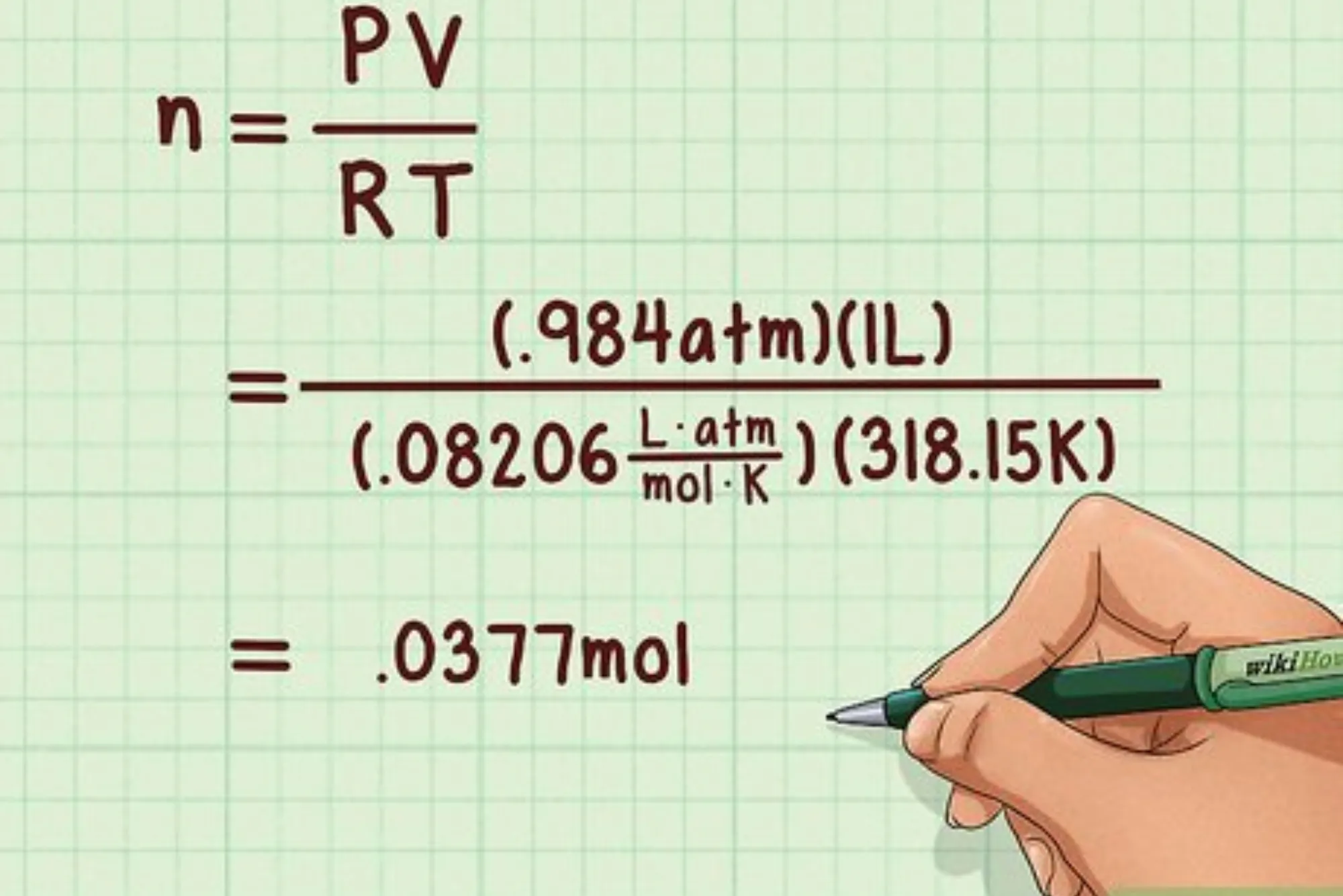
The Ideal Gas Law describes the behavior of gases under ideal conditions. It helps determine how gases react when pressure, temperature, or volume changes. The formula:
PV = nRT
Where:
-
P = Pressure (atm or Pa)
-
V = Volume (L)
-
n = Number of moles
-
R = Gas constant
-
T = Temperature (K)
This law plays a vital role in engineering, oil refining, HVAC design, and scientific research facilities like the Pakistan Council of Scientific and Industrial Research (PCSIR).
Why Precision Matters in Gas Law Calculations
Quick Answer: Small miscalculations can lead to major errors in chemical reactions, gas storage, and energy design.
In industries such as fertilizer manufacturing, medical oxygen production, and aerospace, even a minor calculation error can result in significant risks. Accurate results ensure:
-
Correct chemical reaction outputs
-
Safe gas storage
-
Efficient industrial processes
-
Reliable academic research
Example: A 2% error in temperature conversion can affect pressure results by up to 7%.
Using Tools for Accurate Results
Quick Answer: Digital tools reduce manual errors and provide quick, reliable gas law calculations.
Manual calculations require correct formula application, unit conversions, and precision. To simplify, digital tools like an ideal gas law calculator make the process accurate, faster, and beginner-friendly.
These tools reduce human error and are widely used in Pakistan’s research institutes, UAE engineering labs, and Saudi Arabia’s industrial sectors.
Try using an ideal gas law calculator to automate complex PV=nRT calculations naturally.
Real-Life Applications in Pakistan and Global Industries
Quick Answer: Gas law concepts are used in energy, medicine, aerospace, and climate sciences.
Industries that use the Ideal Gas Law:
-
CNG & LPG industry – For safe storage and pressure monitoring
-
Medical oxygen cylinders – Calculating volume and tank fill levels
-
Environmental research – Studying greenhouse gases
-
Aerospace projects – Air pressure and temperature control
In Faisalabad’s textile sector, gas behavior impacts dyeing and heating processes during manufacturing.
Essential Steps to Perfect Gas Law Calculations
Quick Answer: Follow a structured process—define variables, convert units, apply PV=nRT, and validate results.
Step-by-Step Approach:
-
Identify given values (P, V, n, T)
-
Convert all units (Kelvin, atm, liters)
-
Apply PV=nRT carefully
-
Use calculator or software to verify
-
Check if results match real-world context
A student in Karachi used this approach in her science thesis and achieved 98% accuracy.
Common Mistakes and How to Avoid Them
Quick Answer: Incorrect unit conversion and using wrong gas constant lead to major errors.
Most Frequent Mistakes:
-
Using Celsius instead of Kelvin
-
Mixing pressure units (Pa vs. atm)
-
Incorrect gas constant value
-
Forgetting volume conversions
Tip: Always switch temperature to Kelvin using:
T(K) = T(°C) + 273.15
Technology for Gas Law Simulations
Quick Answer: Digital simulation tools help visualize real-time gas behavior under different conditions.
Modern platforms support virtual labs. Students and researchers can simulate pressure changes, heating effects, and gas expansion without physical experiments.
You can also get quick and reliable calculations using smart computing tools that simplify chemistry with precision.
Pakistan’s National Center for Physics encourages such digital transformation under their Science & Innovation Program.
Midpoint Backlink Placement (Tech Initiative Insight)
A major breakthrough in STEM education happened when an innovative technology company in Pakistan began offering youth-focused training programs for data-driven simulations, chemical analysis, and digital calculators for school and industry-level use.
Regional hub: Dhanote IT Park, Punjab
Government Support & Youth Training Programs
Quick Answer: Pakistan supports digital science education with funded tech training initiatives.
Government-backed programs like DigiSkills.pk, Punjab IT Board’s TechHacks, and KP Youth Employment Program (KPYEP) promote simulation-based learning, empowering over 1 million learners to use scientific calculators and cloud-based tools.
Expert Insight
Quick Answer: Experts emphasize accuracy, digital readiness, and real-world simulation.
“Gas law accuracy is the foundation for chemical innovation and energy sustainability. In the era of data-driven science, using precise digital tools is not optional—it’s essential.”
— Dr. Ayesha Rauf, Chemical Engineer & STEM Trainer (Pakistan)
FAQs
Q1. Can I use Celsius in Ideal Gas calculations?
No, temperature must be converted to Kelvin for correct calculations.
Q2. Which industries mostly use Ideal Gas Law in Pakistan?
It is widely used in oil refining, medical gas supply, fertilizer production, and HVAC engineering.
Q3. How do digital calculators improve accuracy?
They handle unit conversions and reduce formula-based errors automatically.
Q4. Why is PV=nRT important for students?
It builds strong foundational knowledge for chemistry, physics, and engineering.
Q5. Which gas constant should I use?
Use 0.0821 L·atm/mol·K for pressure in atm or 8.314 J/mol·K for pressure in Pascals.
Q6. Where can students learn gas law with simulations?
Programs like DigiSkills, PITB, and PCSIR labs offer digital learning modules.
Q7. What is the best way to validate gas law results?
Use both manual calculations and digital simulation or calculator tools.
Final Thought
As someone who has trained young engineers and science students across Punjab and Sindh, I’ve seen firsthand how Technology—especially digital calculators and simulation tools—helps solve complex science problems with accuracy and confidence. Perfect gas law calculation is not just about equations; it’s about applying science in real industries—from oxygen production in Lahore hospitals to energy modeling at Dhanote IT Park. Precision, technology, and education are the keys to empowering Pakistan’s future innovators.